Learn about the instruments
Here is a little more history of the mechanical organ
Fairground Organs
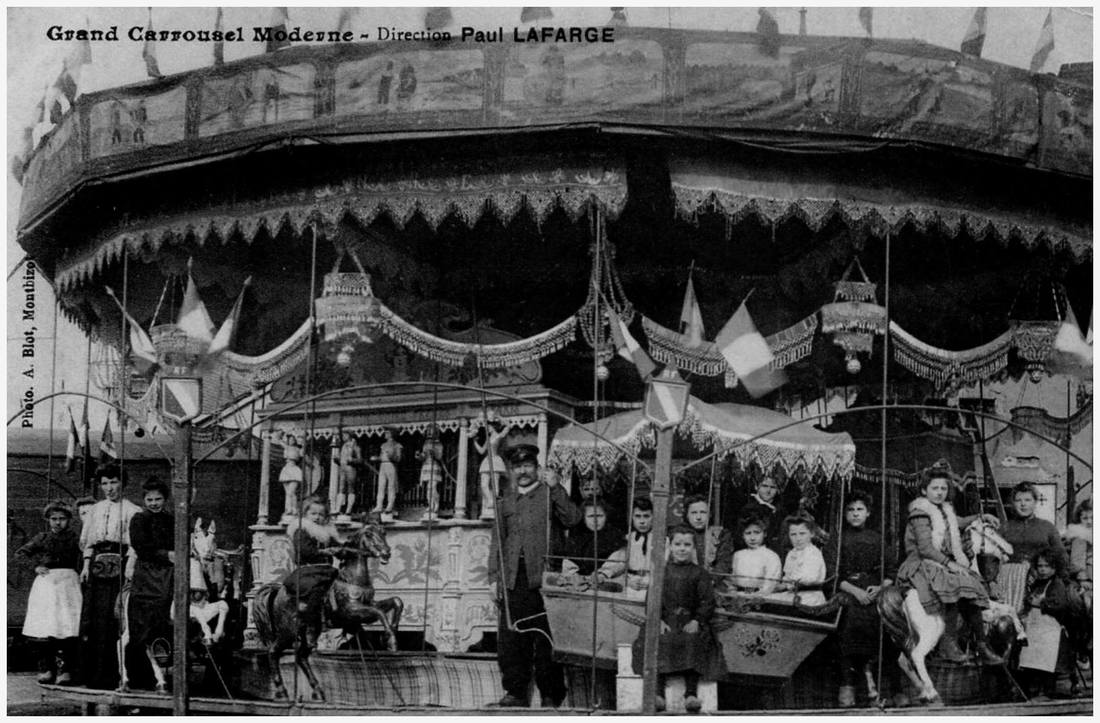
From the mid-19th Century, fairgrounds became increasingly popular drawing countless thousands in search of thrilling entertainment. Mechanical fairground organs were used to provide essential music and add to the sparkle.
|
Originally these instruments would have been operated with a pinned barrel which gave a limited repetoire of condensed tunes. In 1892 the Paris-based mechanical organ builders Gavioli & Co., patented a revolutionary new operating system using punched cardboard "books" which you will see many organs use today.
|
|
|
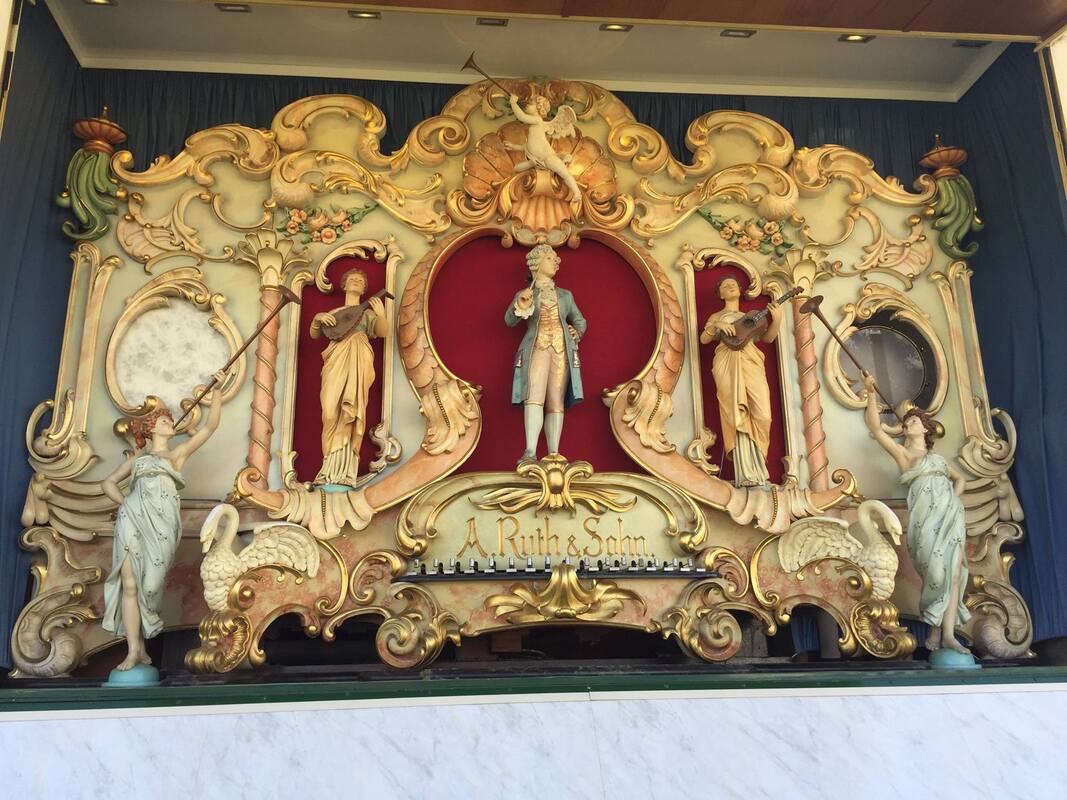
An example of a Fairground Organ which has attended the Diss Organ festival is the 93 Keyless “The Andreas Ruth” Fairground Organ owned by Nigel Myres. This organ was built in Waldkirch – a small town in the Black Forest region of Germany and would have originally been a barrel organ. Its early history is unknown but likely used on a German fairground. The organ returned to the Ruth factory in the 1920’s to be converted from barrel operation to the book playing system. Apart from the change from barrel to book and from lever to pneumatic systems, the organ remains tonally as it did when it was built.
|
Street Organs
The "organ grinder" simultaneously earned a living and became the unmistakable aspect of Dutch culture, filling the streets with the sound of cheerful music in the days before records and radio.
|
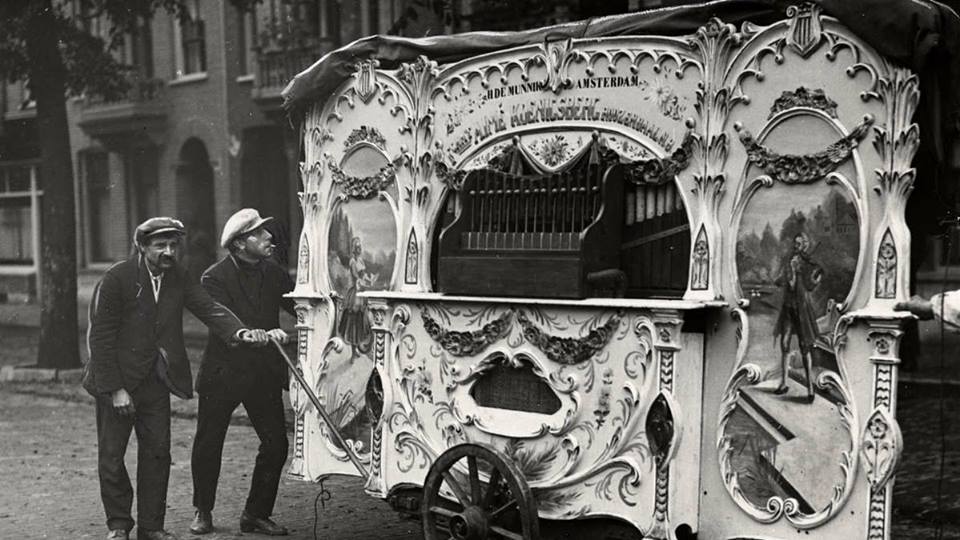
Although small barrel organs were used in many countries by street musicians, from 1875 large and increasingly ornate machines became particularly popular in the Netherlands and the "organ man" was soon established as a regular feature of Dutch town and city life. A Dutch Street Organ in a city or town is still a common sight today.
|
|
|
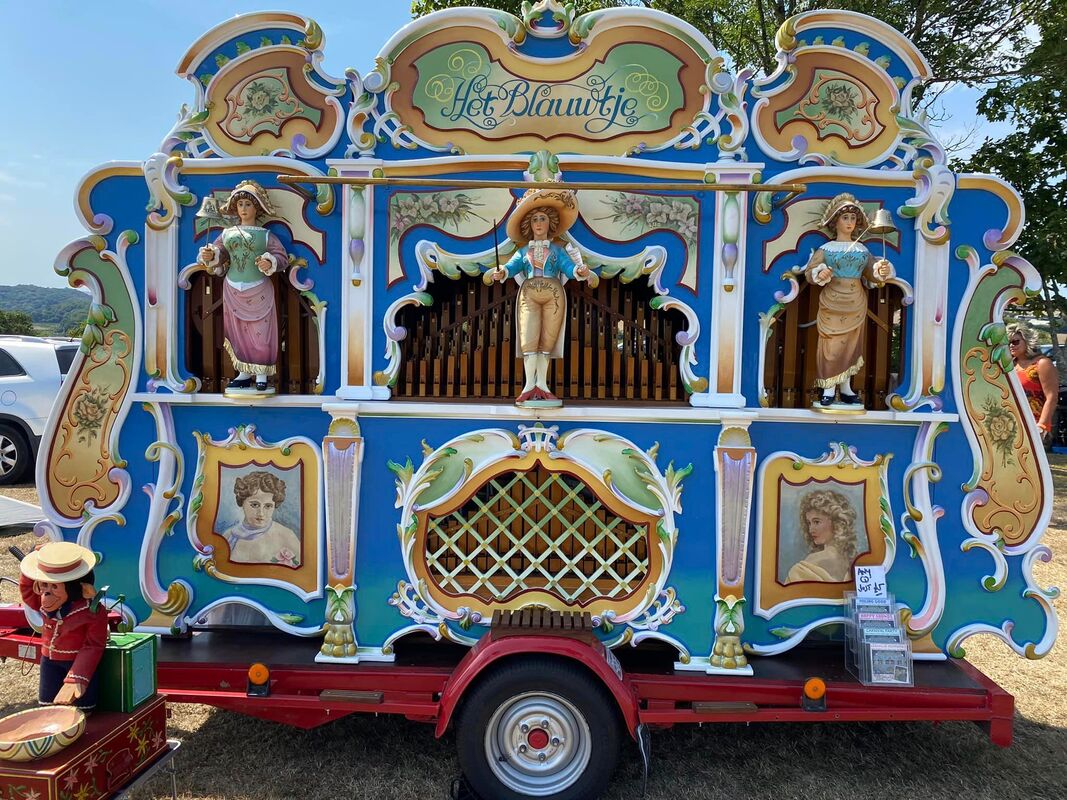
An example of the Dutch Street Organ that attends the Diss Organ Festival is "Het Blauwtje" owned by James Dundon from Cornwall.
The instrument has spent its like busking on the streets collecting money until it was imported by James around 10 years ago. It works on cardboard books with a twin set of bellows pumping to produce the air. It is displayed in the traditional way, on a flat bed trailer showing off all the workings of the organ! |
Dance Organs
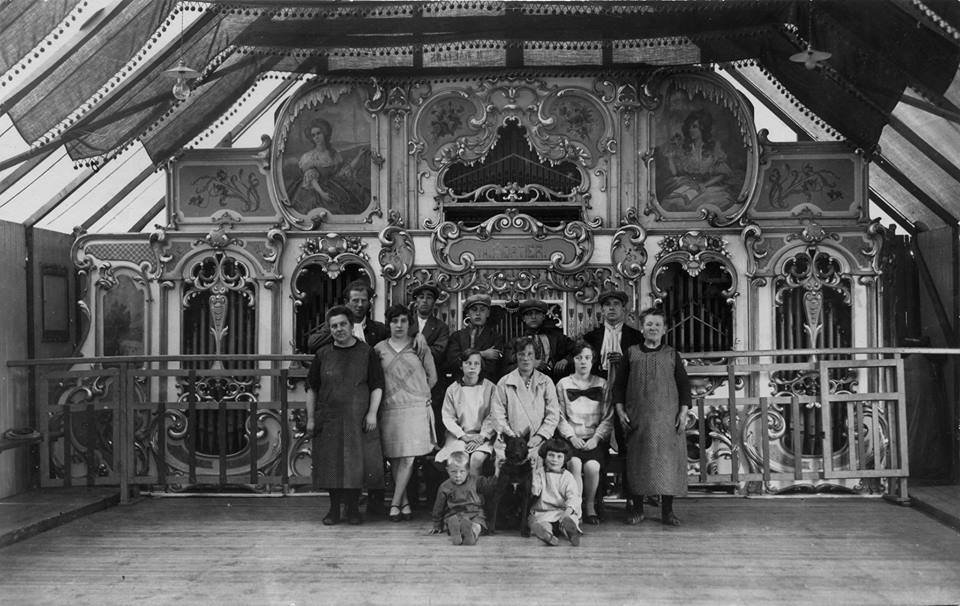
Subject to the whims of fashion, Dance organs changed dramatically through the years to keep up with trends. Cafe's across the continent are filled with these sounds, still to this day.
|
Used primarily in Belgian cafés and dance halls, these mechanical jazz bands supplanted the need for costly orchestras and could play all evening without stopping. They reached into the "art deco" era and many organs had huge façades made in that iconic style.
|
|
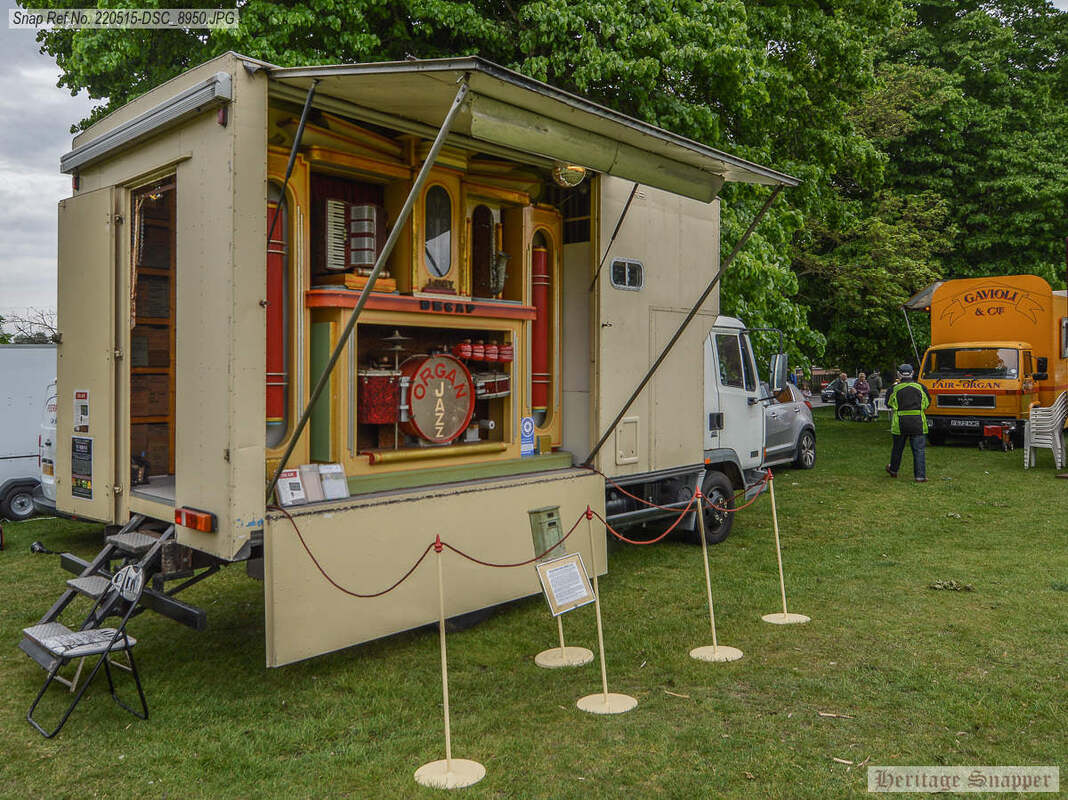
An example of a Dance Organ which appears at the Diss Organ Festival is a Decap organ "Lucy". Built by Gebroeders Decap of Antwerp in 1946, this instrument would have been used in a smaller setting such as a café to play background music. Today it is mounted in a 7.5 ton vehicle with an opening side to display the instrument. Lucy has an extensive repertoire of cardboard book music and the organ front is illuminated with multi-coloured lighting that constantly changes as the music plays.
|
|